
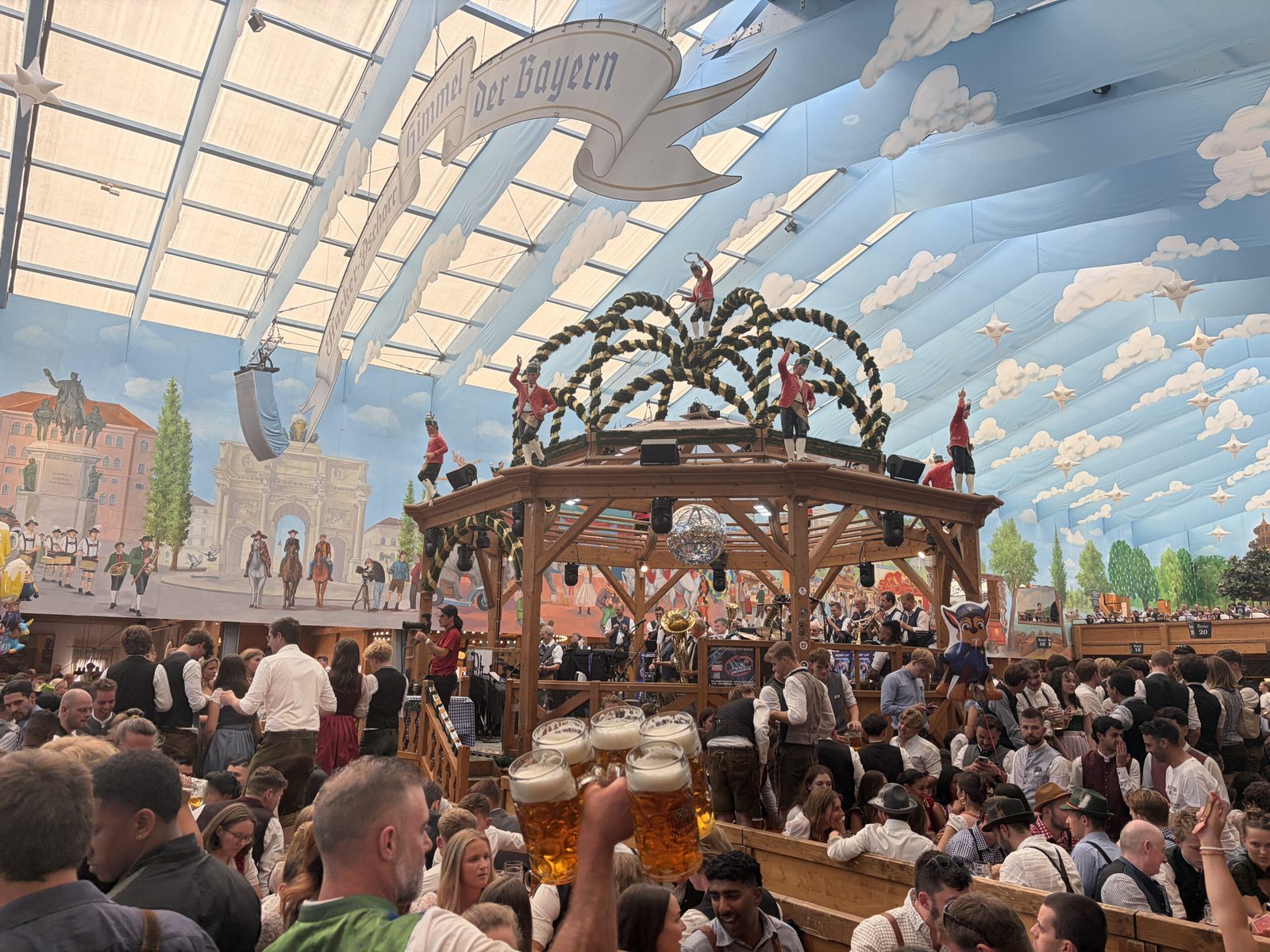
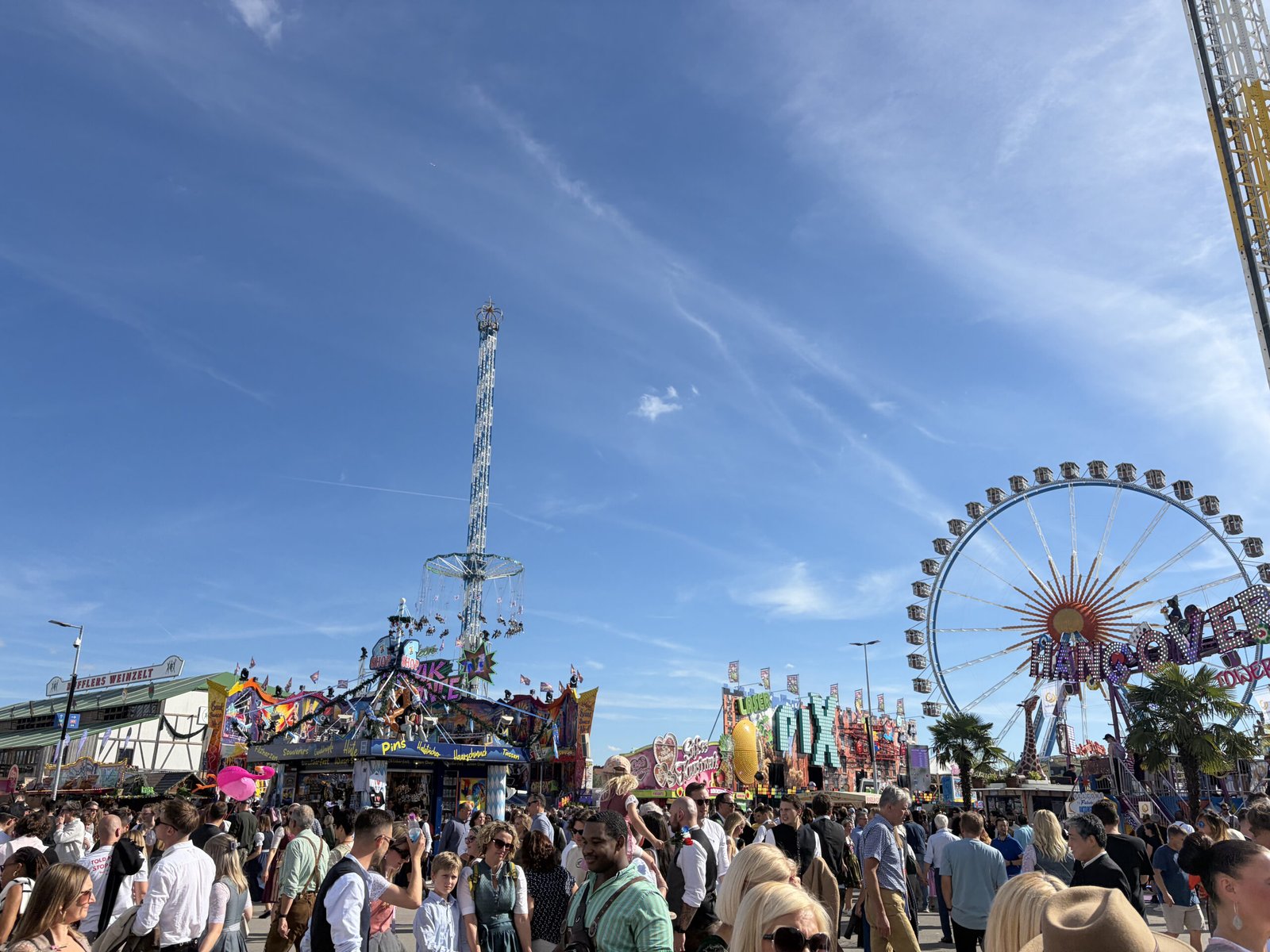
A raised glass, a crowded avenue, a Ferris wheel against the sky. The photographs of Oktoberfest 2026 move between the intimacy of a shared table and the scale of the Theresienwiese. Together, they offer a way into Munich’s Wiesn: a temporary landscape where Bavarian customs, fairground entertainment and the simple act of meeting friends occupy the same space.
Held from 19 September to 4 October, the 16-day festival drew record crowds. Yet the city’s preliminary closing report offers a useful reminder behind the international attention: most visitors still came from Munich and its surrounding region.

Tradition, still in motion
Oktoberfest began with the celebrations surrounding a royal wedding in 1810. Its identity has grown through rituals that remain recognisably Bavarian, from the ceremonial tapping of the first beer barrel to brass music and traditional dress. These customs give the festival a continuity that survives its changing scale.
The Oide Wiesn makes that connection to the past especially visible. Created for the festival’s bicentenary in 2010, this historical section brings together older fairground rides, folk traditions and music. At Festzelt Tradition, brass bands and performances by traditional costume groups place Bavarian culture at the centre of the gathering.
Around the table
Inside the tents, the architecture of the occasion is communal: long tables, benches and a bandstand. In the cover photograph, raised beer steins sit beneath a ceiling painted with clouds, while guests fill the tables around a wooden stage. The scene gives the vast festival a human scale.
Outside, decorated tent façades extend that sense of theatre into the avenues. The city’s report describes strong attendance in the beer gardens and a lively mix of families, friendship groups and regular gatherings. Oktoberfest is also a social calendar, made up of many smaller occasions.

Beyond the beer tents
The fairground offers another rhythm. A Ferris wheel rises above the stalls; tall rides cut into the sky. Moving between these attractions and the tents changes the scale again, from a seat at a table to a crowd crossing the grounds. The photographs leave room for both.
A record year, in perspective
According to Munich’s preliminary closing report, organisers estimated 7.4 million visitors, including 447,000 at the Oide Wiesn, making 2026 the most visited edition to date. Beer consumption reached approximately 6.7 million Maß. These are the report’s provisional figures, rather than final audited counts.
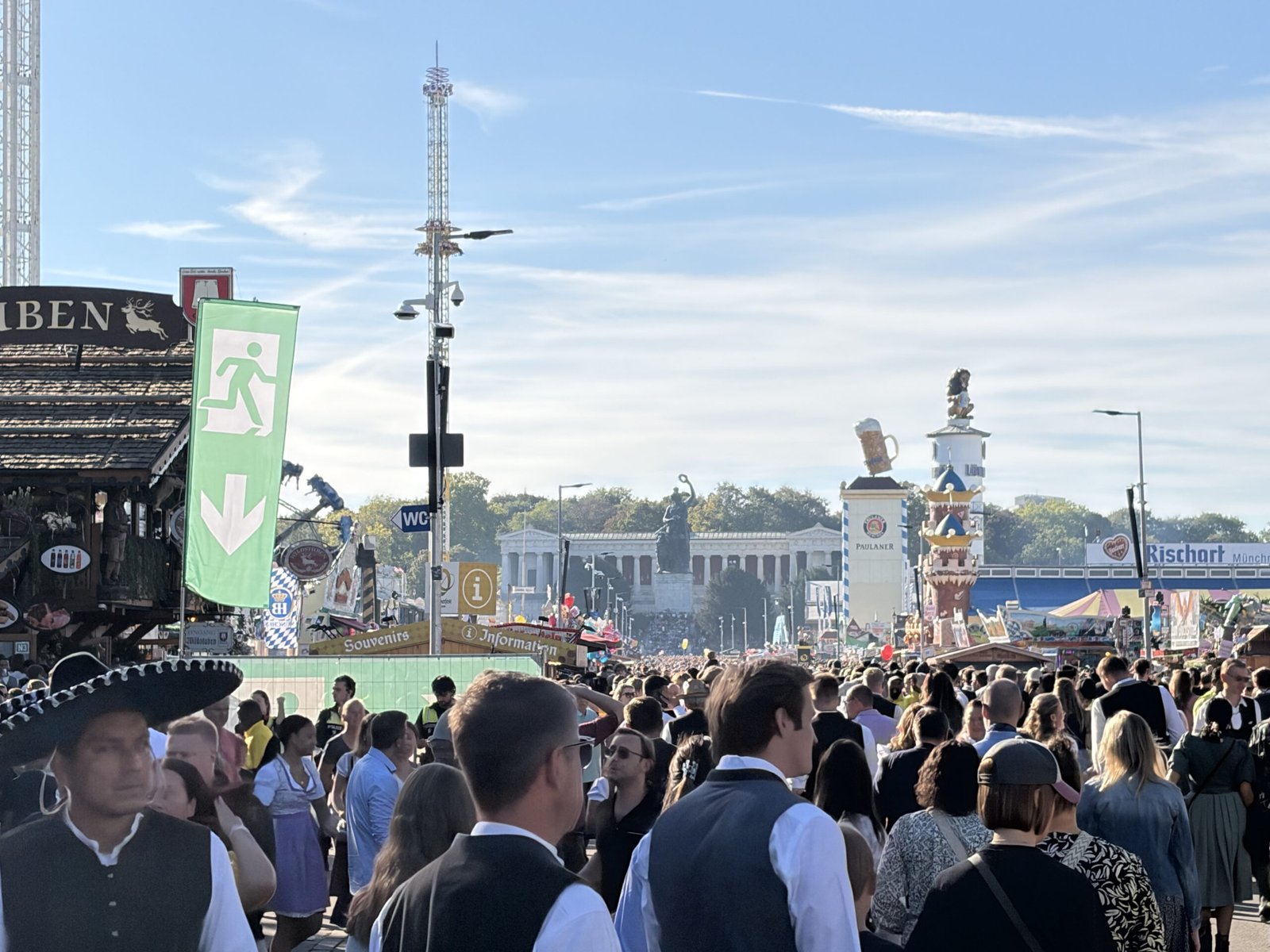
The numbers describe its reach. The photographs bring it back to people: arriving, gathering and raising a glass. For another view of the city’s cultural life, step inside MUCA. Munich has room for both the collective celebration and the quieter encounter.
Historical context: Oktoberfest history and the Oide Wiesn, official Oktoberfest website. Photography: Gastrovel.