
Munich is a city where history and modernity often meet. At Pinakothek der Moderne, that relationship takes on a different form, bringing art, architecture, and design together under one roof.
Located in the Kunstareal, Munich’s museum district, the Pinakothek der Moderne offers more than a traditional gallery experience. Its collections encourage visitors to look beyond appearances and consider how objects, spaces, and artistic ideas shape the world around them.

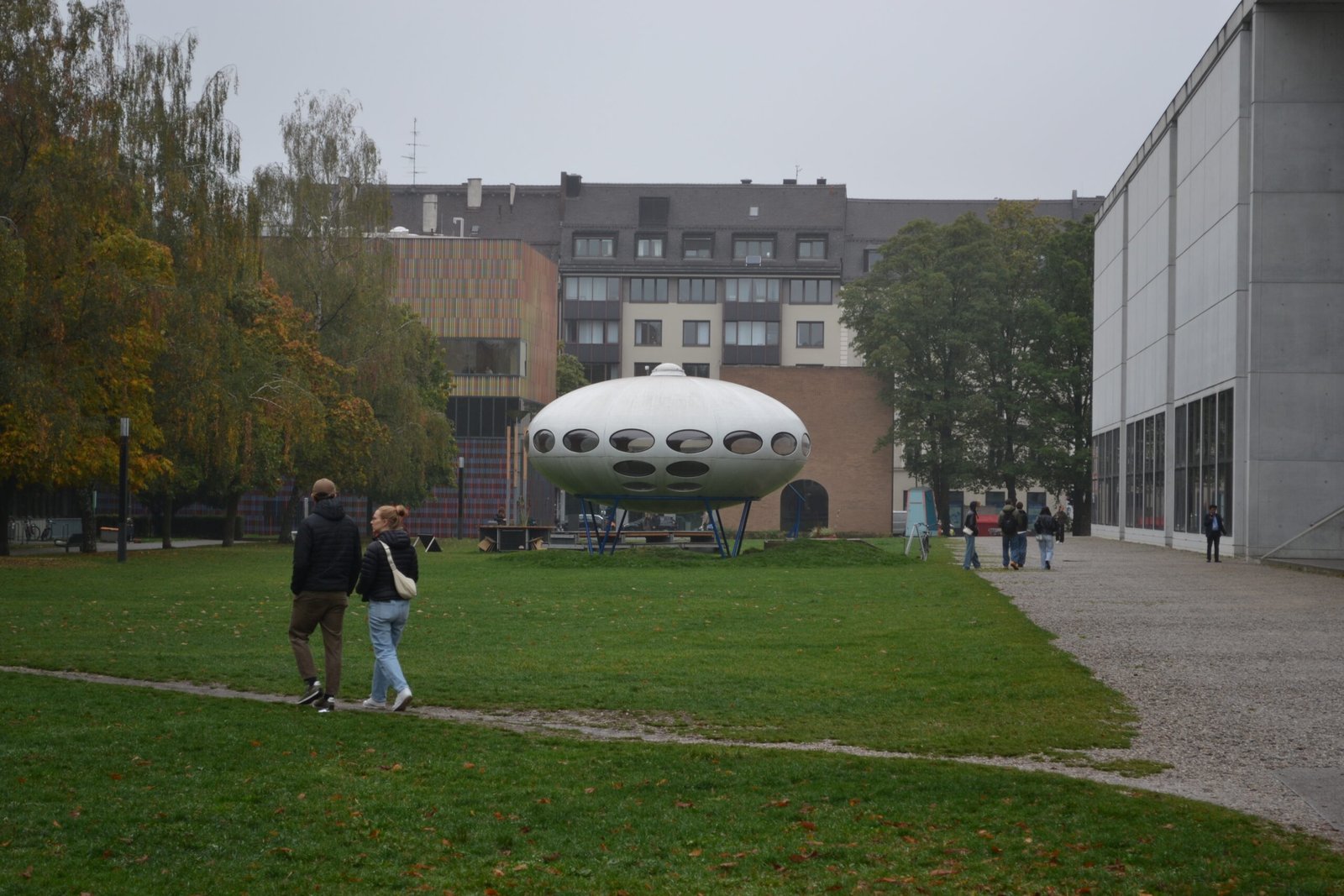
A Space Designed to Be Explored
Before encountering the collections, the building itself deserves attention.
Designed by architect Stephan Braunfels, the museum is organized around a vast central rotunda. Natural light enters through its glass dome, illuminating the galleries and sweeping staircases that connect the different exhibition levels.
The architectural language is restrained: white walls, exposed concrete, generous open spaces, and carefully controlled light. Yet the experience is anything but monotonous.

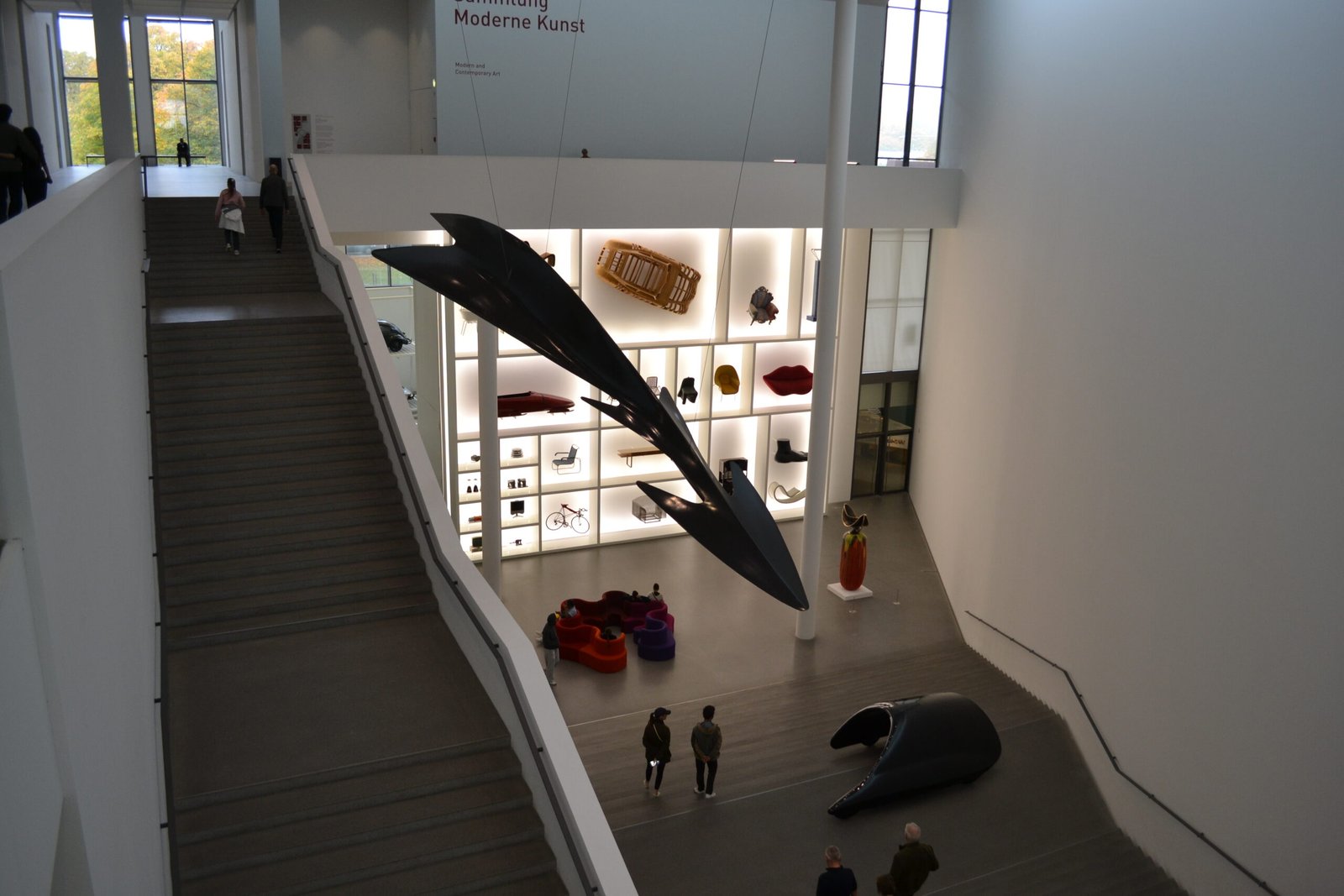
The rotunda creates a sense of orientation while inviting visitors to move freely between different disciplines. From its upper levels, the museum reveals itself through changing perspectives, unexpected openings, and glimpses into the galleries below.
Here, architecture is not merely the setting for art. It becomes part of the experience.
Four Museums, One Conversation
Pinakothek der Moderne brings together four institutions dedicated to modern and contemporary art, prints and drawings, architecture, and design.
This combination makes it possible to move between seemingly unrelated objects and ideas. A painting can be followed by an industrial prototype; a sculptural form can lead to a question about how everyday objects are conceived and manufactured.
Rather than presenting creativity as a single discipline, the museum reveals the connections between artistic expression, technological development, and daily life.

One of the most fascinating aspects is the design collection, where familiar objects are removed from their usual surroundings and presented as cultural artifacts.
Chairs, vehicles, household objects, and experimental constructions become opportunities to consider how function, aesthetics, and human needs influence one another.
A Century of Design
Die Neue Sammlung – The Design Museum is central to this exploration.
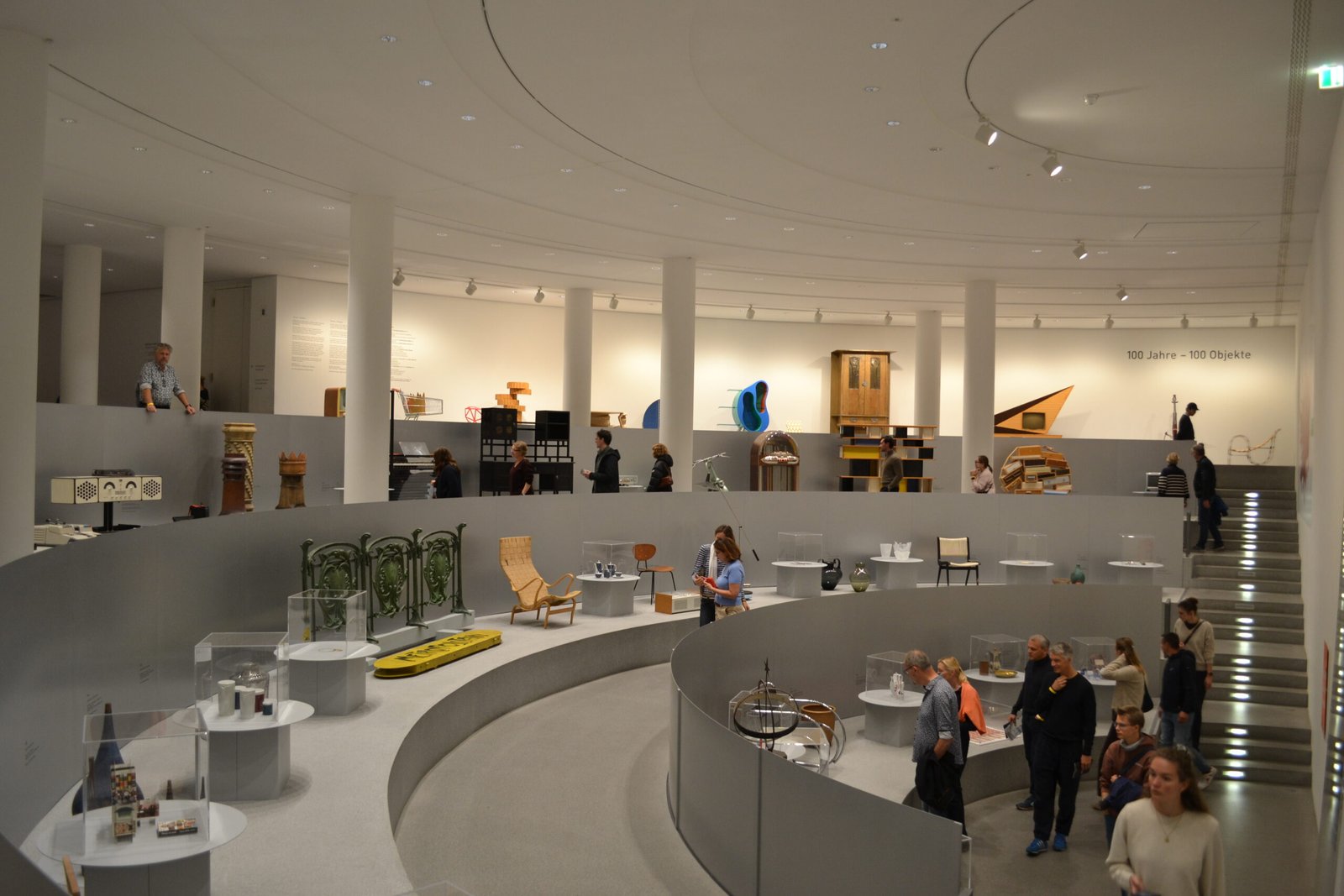
Its exhibition 100 Years – 100 Objects, presented to mark the museum’s centenary, brings together a selection of significant and lesser-known objects from its collection.
Instead of organizing them by the dates of their creation, the exhibition follows the years in which they entered the museum. This approach reveals how collecting priorities, cultural interests, and ideas about good design have changed over time.
The result is a journey through design history that goes beyond individual objects.

Elsewhere in the collection, vehicles such as the Tatra 87 demonstrate how engineering and aesthetics can become inseparable. Its streamlined silhouette reflects an era fascinated by movement, aerodynamics, and technological progress.
Objects originally created for practical purposes acquire a different meaning when viewed in a museum. Their design becomes a record of the ambitions and priorities of their time.
Designing With Nature
Contemporary design raises a different set of questions.
In Klarenbeek & Dros: Design of the Unusual, the Dutch design duo explores materials derived from fungi, algae, seaweed, and moss.
Their work challenges familiar distinctions between the natural and the manufactured. Instead of relying exclusively on conventional industrial materials, they investigate how biological processes can contribute to the creation of functional objects.
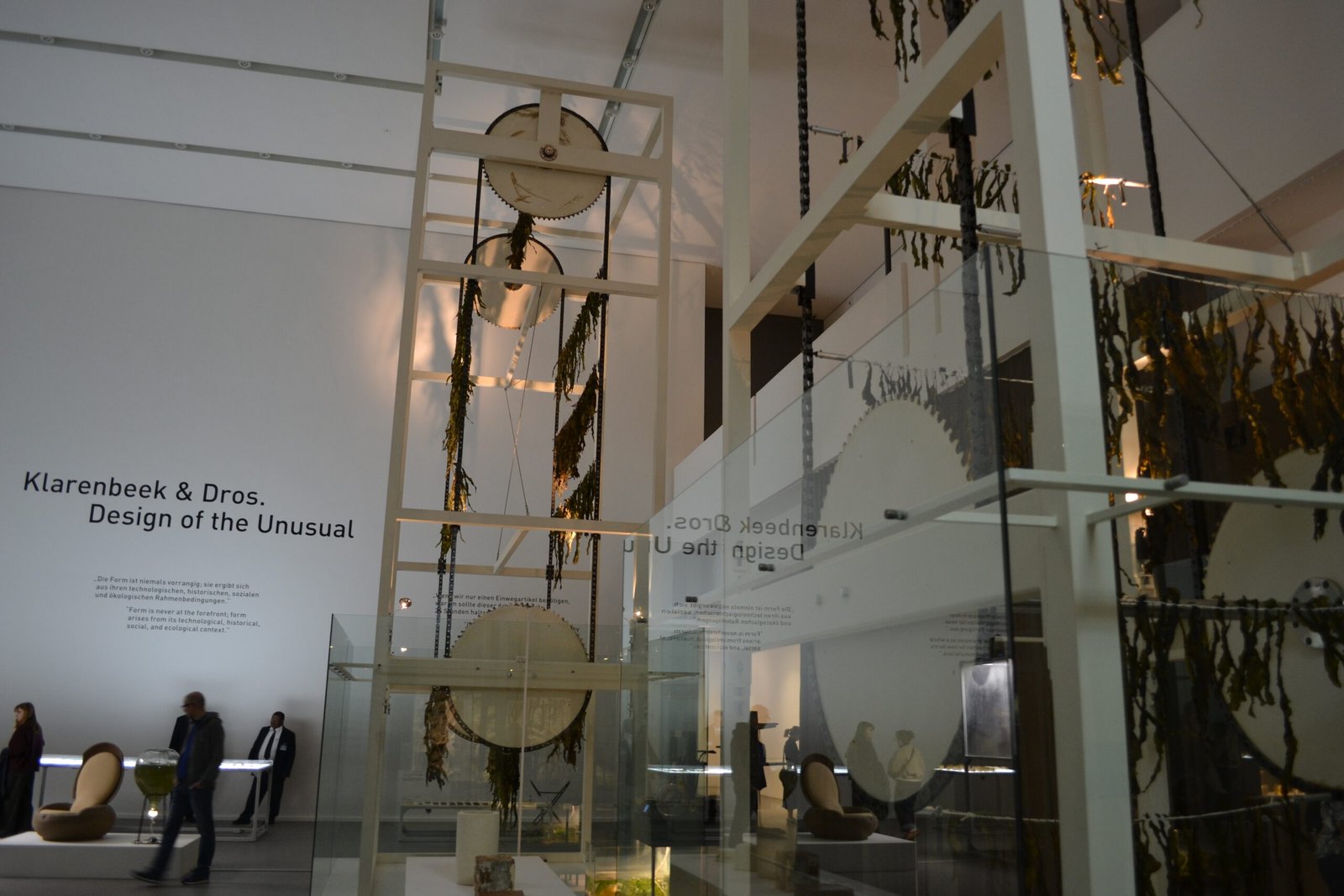
Furniture made with mycelium, objects produced from bioplastics, and experimental uses of algae demonstrate an approach in which design and ecological thinking become closely connected.
The exhibition also introduces visitors to the research and material experimentation behind these objects.
It is a reminder that the future of design may depend not only on creating new forms, but also on reconsidering what those forms are made from.
Art Beyond Familiar Boundaries
The museum’s modern and contemporary art galleries offer another perspective.
Here, paintings, sculptural works, installations, and experimental visual forms coexist across different spaces.


Some works are immediately striking, while others require a closer look. Their relationship with the surrounding architecture often changes the way they are perceived.
A large sculpture can interrupt the openness of a gallery. A restrained composition can draw attention to an otherwise empty wall. A brightly illuminated installation can alter the atmosphere of an entire space.


These contrasts are part of what makes the Pinakothek der Moderne compelling. The museum does not demand a single interpretation from its visitors.
Instead, it offers room for curiosity, reflection, and personal discovery.

Plan Your Visit
Location: Barer Straße 40, 80333 Munich, Germany
Opening hours: Tuesday–Sunday, 10:00–18:00; Thursday until 20:00. Closed Mondays.
Admission: €10 regular, €7 reduced, and €1 on Sundays. Special exhibition fees may differ.
Official website: Pinakothek der Moderne
Opening hours, admission prices, and exhibition schedules should be checked on the official website before visiting. Some galleries may be temporarily closed for installation work; check the museum’s visitor information for current access.
Photography: Gastrovel.